Doujinshi Explained: What the Term Means, How It's Sold, and Why It Matters
Doujinshi Explained: What the Term Means, How It's Sold, and Why It Matters
Short answer: doujinshi (同人誌) is self-published print work — manga, novels, magazines — made by amateurs and sold at fan conventions. It is the publishing tradition behind a huge share of the anime and adult art you see online, and it runs on its own distribution system.
If you take one thing from this page: the format is self-publishing, and the genre is whatever the circle decided to draw. The word gets thrown around as slang for "adult manga", which is only partly right. Doujinshi is a format, not a genre: a self-printed cookbook zine from a hobby circle and a 300-page adult manga from a professional artist are both doujinshi. This page explains the format, the market, and the legal gray area that surrounds it.
What the word actually means
Doujinshi is built from two pieces: doujin (同人), roughly "same person" — people who share a common interest — and shi (誌), a suffix for periodicals. Together it means a publication made by a group of like-minded creators rather than a commercial publisher.
Creators organise in sākuru (circles). A circle can be five people or one: a solo creator is a kojin sākuru, a personal circle. The circle name, not the individual artist, is what appears on the table at a convention and on the cover.
| Term | What it is | Common mix-up |
|---|---|---|
| Doujinshi | Self-published print work (manga, novel, magazine) | Not a genre — adult content is a subset |
| Doujin | The wider category of self-published creative work | Used loosely for anything fan-made |
| Circle (sākuru) | The creator group that publishes a doujinshi | Not the same as a publisher |
| Aniparo | Parody of an existing anime/manga series | The format that dominated from the 1980s |
How it became a mass market
The format is older than the internet by a century: the first doujinshi-style publication is usually traced to Meiroku Zasshi in 1874, and Garakuta Bunko in 1885 was the first to publish doujinshi fiction. For most of that history it was a literary and hobbyist side-channel.
Two things turned it into the thing you see today. Photocopiers in the 1970s made short print runs cheap, and Comiket — Comic Market, first held in 1975 — gave creators a physical marketplace. From the 1980s the content shifted toward parody of existing series, which is the point where doujinshi becomes recognisably the anime-fandom phenomenon it is now.
Comiket: where most of it changes hands
Comiket runs twice a year at Tokyo Big Sight, in summer and winter. The scale is hard to picture from outside: the convention fills over 20 acres — roughly 81,000 square metres — with tables selling doujinshi, and it is the single largest venue for the format. Circles queue for hours, sell out in minutes, and print runs are deliberately small.
For buyers outside Japan, the practical reality is different: most circulation now happens through specialist online stores, print-on-demand services and proxy shipping rather than convention floors. The format survived the move online because the audience was already used to hunting for specific circles.
The money is real, even if the print runs are small. A 2008 otaku industry white paper estimated doujinshi sales for 2007 at 27.73 billion yen — about 14.9% of total otaku hobby spending (JPY, as reported). That number is the reason specialist shops, printers and conventions exist as an industry rather than as a hobby side-project.
What is actually inside one
Three broad categories cover most of the shelf:
- Original work — characters and stories the circle owns outright.
- Parody / derivative work — the dominant category since the 1980s: existing characters placed in new situations.
- Adult work — a large and openly sold segment in Japan, sold with age restrictions at conventions and specialist shops.
An important detail for anyone browsing: adult doujinshi is a segment of the format, not a synonym for it. Treating "doujinshi" as code for pornography is how people end up surprised by a 200-page fan art book about a mecha series.
Production follows the audience: photocopied and digitally printed booklets for small circles, offset runs for established ones, and print-on-demand for anything that sells out. A circle that sells out at Comiket often reprints rather than expand the run, which is why secondhand prices for a popular book can climb immediately after a convention.
The legal gray zone
Derivative doujinshi exists in a tolerated space rather than a clearly licensed one. Rights holders can object — and occasionally do — but most choose not to police fan publishing, partly because the market functions as a talent pipeline and free promotion. The 1991 arrest of shop managers over a lolicon doujinshi is the case usually cited as the moment the line became visible.
Two practical consequences matter for buyers:
- The Doujin Mark License exists — a voluntary marking system letting rights holders state what fan use they allow, printed as a symbol on participating works.
- Scans are not the format — downloading pirated scans is a different act from buying a circle's book, and it is the part that gets shops and translators in trouble.
Why an onahole shop is writing about this
Because the audiences overlap, and the overlap is the whole reason anime-themed toys exist. A fan who buys doujinshi at a convention is the same customer browsing anime-themed onaholes — the waifu concept, the character art, the circle culture around it. Japanese makers build product lines around exactly that audience: TAMATOYS runs a licensing strategy, Magic Eyes uses a consistent original art style, and the packaging borrows the visual grammar of doujinshi covers.
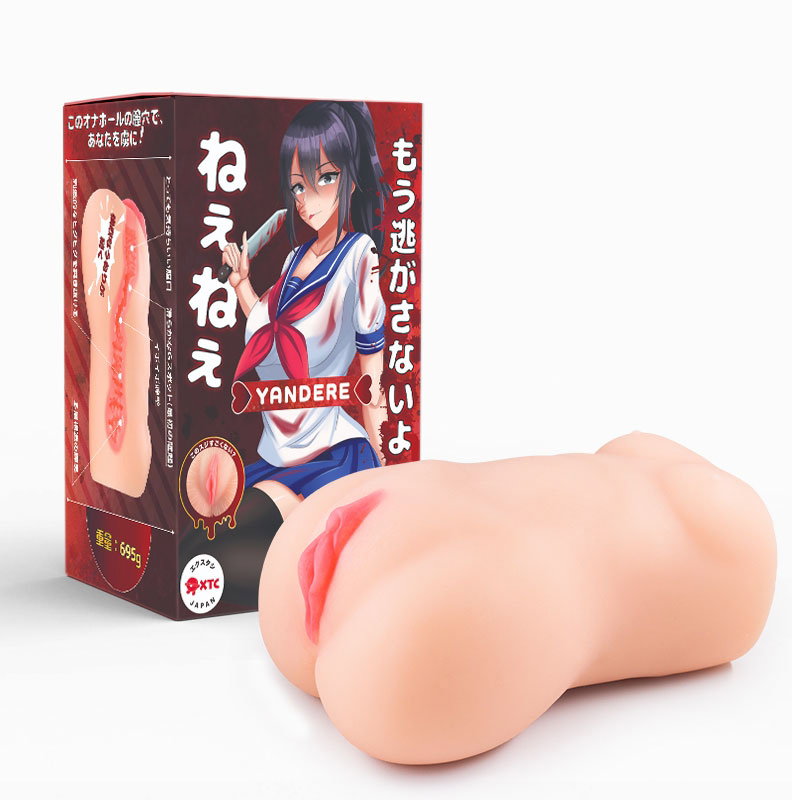
We covered the character-art side in why anime theming changes how a toy is experienced. If you are new to the category entirely, start with what an onahole is.

FAQ
Is doujinshi always adult content?
No. It is a self-publishing format. Adult work is a large segment, but non-adult manga, novels and fan books are sold the same way.
What is the difference between doujin and doujinshi?
Doujin is the broader category of self-published creative work; doujinshi specifically refers to the printed publication.
Where do people buy doujinshi outside Japan?
Specialist online doujin shops, print-on-demand storefronts and proxy shipping services. Convention floors are the Japanese channel, not the international one.
Is doujinshi legal?
Original work is plainly legal. Derivative work sits in a tolerated gray zone, with the Doujin Mark License as a voluntary framework for what rights holders allow.
What is Comiket?
Comic Market: the largest doujinshi convention, held twice a year at Tokyo Big Sight since 1975.
Do circles sell outside conventions?
Yes. Many circles run their own storefront, sell through specialist doujin shops, or use print-on-demand. Convention sales are the traditional channel, not the only one.
Why is doujinshi associated with anime?
Because parody doujinshi of anime and manga series has dominated the format since the 1980s, and the audience overlaps almost entirely with anime fandom.
More Articles

Top Anime Onahole Brands Compared: Which Is Best for You?
TOMAX vs Magic Eyes vs Hatopla compared: fantasy multi-texture designs, realism-first molding and soft beginner picks — which brand fits you?
Korean Onaholes Are Quietly Taking Over the Market — And Japanese Brands Are Noticing
Are Korean onaholes disrupting Japan's market? Sensbody's skin-soft TPE vs NPG's engineered precision — the market shift explained.
Reddit's Onahole Lube Obsession: What Actually Works (And Why Onatsuyu Wins)
Why r/OnaholeToys keeps recommending Onatsuyu lube: the viscosity and reliability behind the consensus — and why a little goes a long way.
From AV Star Casts to Realistic Design: How NPG Makes Their Molds
Inside NPG Japan's mold-casting process: how actress-based onahole molds are made, what's real engineering versus marketing, and why it changes the feel.
Why Toronto's Adult Shops Are Sleeping on Japanese Onaholes
Toronto's adult shops stock Fleshlights but skip Japanese onaholes. Our gap analysis: why it happens, the hidden local specialist, and faster options.