Realistic Sex: What Actually Feels Real (and What Can't Be Faked)
Realistic Sex: What Actually Feels Real (and What Can't Be Faked)
Short answer: "realistic" is not one quality. It is three separate sensations — texture, temperature and pressure — and most products get one of them right while failing the other two.
Nobody searches "realistic sex" looking for a physics lecture. They are usually trying to answer a narrower question: does this feel like the real thing, and how would I know before spending $150? That question applies whether you are reading about a partner, a material, or a sleeve.
We sell Japanese onaholes in Canada, so we have a commercial interest in one answer. But the honest breakdown is more useful: what "realistic" actually decomposes into, which parts material can reproduce, and which parts no product on the market can fake.
What people mean when they say "realistic sex"
The phrase gets used for three different things, and they get mixed up constantly:
- Realistic sensation — closeness to the feel of skin, friction and pressure during sex.
- Realistic appearance — a body, an opening, a shape that looks like anatomy rather than a tube.
- Realistic weight and resistance — something heavy enough to push back instead of a light sleeve that moves with your hand.
Products can be strong on one axis and weak on another. A 200g sleeve with lifelike internal texture still feels like a sleeve because of the weight. A 6kg hip with a simple tunnel can feel more "real" in the hand than in use. Knowing which axis you actually care about is the entire buying decision.
The three sensations that decide realism
| Component | What it is | What changes it |
|---|---|---|
| Texture | Micro-friction of the surface — smooth, matte, slightly tacky | Material (TPE vs silicone), surface finish, powder |
| Temperature | How quickly it warms to body heat and holds it | Material density, wall thickness, ambient temperature |
| Pressure | How the walls push back and distribute grip | Weight, wall thickness, layer count, tunnel design |
Textbooks describe human skin as warm, slightly elastic and lightly textured. A material can get close on all three and still lose on temperature, which is the component buyers underestimate most. A sleeve sitting in a 21°C room feels like a cold object for the first thirty seconds, and no material choice removes that. What density does is decide how quickly the surface stops feeling cold — a thick, dense wall holds heat longer than a thin one, which is why heavy models read as more convincing in the hand.
TPE warms quickly and feels soft; silicone stays firmer and warms more slowly, which some people read as "less real." Neither is better — they are different trade-offs, explained in our dual-layer breakdown.
Materials: TPE, silicone and the dual-layer middle ground
| Material | Feel | Trade-off |
|---|---|---|
| TPE | Soft, warm, slightly tacky — closest to skin at room temperature | Porous, needs drying and powdering, wears faster |
| Silicone | Firmer, smoother, cooler at first contact | Longer lasting, easier to clean, less "soft" out of the box |
| Dual-layer TPE | Soft outer wall over a denser inner canal | Best realism-per-dollar, but the bond line is the failure point |

If you want the shortest version: TPE wins on initial realism, silicone wins on longevity, and dual-layer tries to buy both — at the cost of a seam you have to look after. Two-layer sleeves are the reason the mid-price band exists, which is the point of our premium vs budget comparison.
What a realistic toy can actually replicate
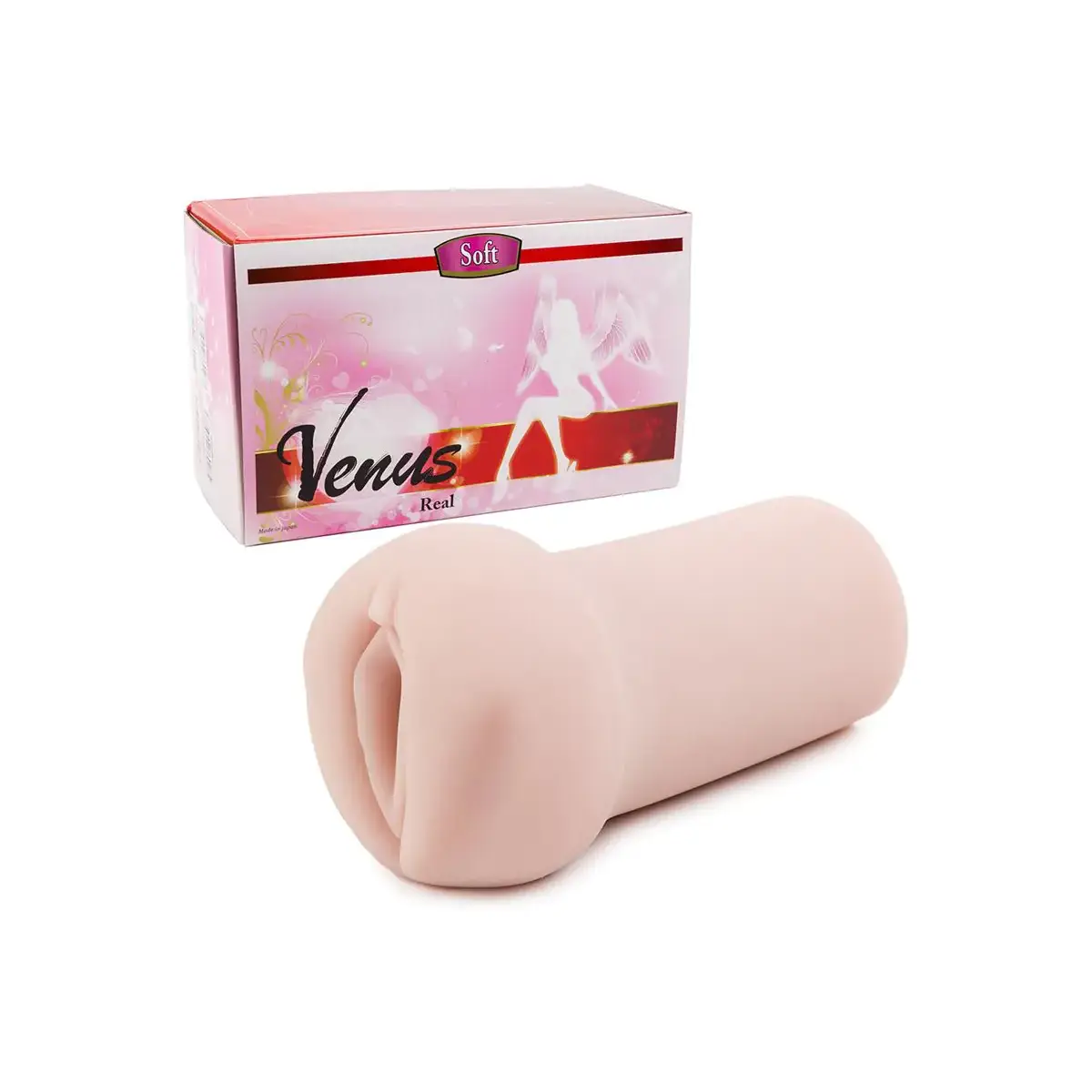
Inside the tunnel, realism comes from four things manufacturers control precisely:
- Wall thickness — thin walls transmit pressure sharply; thicker walls spread it out.
- Layer count — one density feels uniform; two or three create soft-outer/firm-inner contrast.
- Internal geometry — folds, ridges and chambers interrupt suction in a way that mimics anatomy.
- Closed vs open end — a closed end builds pressure; an open end releases it.
What no product can fake
Three things are outside the category's reach, and pretending otherwise is how buyers end up disappointed:
- Internal warmth that responds to you. A sleeve warms toward body temperature and then stops. That is physics, not a quality problem.
- Reciprocity. Realism in sex includes another person's response. A toy can feel like a body; it cannot behave like a partner.
- Variation. Bodies change angle, grip and rhythm. A molded tunnel is fixed — which is also why some people prefer a firmer, more predictable toy.
If that list matters more than the feel, a toy is the wrong purchase and no amount of marketing will fix it. If it does not, the practical question is which numbers to shop by. For background on the category itself, start with what an onahole is.
Shopping by numbers instead of marketing words
"Realistic" appears on almost every product page, so treat it as decoration. Three specifications actually predict the experience:
- Weight — under 200g feels like a novelty, 400–700g is the realistic-handheld band, and above 1.5kg you are into torso territory that changes how you use it.
- Layers — one layer is uniform; two or three create the skin-over-muscle feel people describe as lifelike.
- Material — decides warmth, surface tack and how much maintenance the thing needs.
One variable sits outside those three: hardness grade. Japanese makers sell the same internal design in soft, regular and hard versions, and the difference is not cosmetic — soft versions slow down feedback and read as more forgiving, hard versions sharpen every ridge. If you have never owned one, regular is the safer starting point; if you already know you want less intensity, the soft grade is usually the right call.
We keep a filtered shortlist on the most realistic onaholes collection if you want to skip the theory. Prices on that page are the real CAD prices, not marketing anchors.
Realism costs maintenance
Softer material means more care. TPE needs drying inside and out, then a light dusting of renewing powder to stop it going tacky. Silicone tolerates neglect better but still wants washing. Skip it and the surface degrades within months, which is the fastest way to make a realistic toy feel cheap. The material-by-material routine is in our cleaning guide.
FAQ
Does a realistic onahole actually feel like sex?
It reproduces texture and pressure reasonably well and temperature poorly. Expect "close on feel, not on reciprocity."
Is silicone or TPE more realistic?
TPE feels closer to skin at room temperature. Silicone is firmer, cooler at first touch, and lasts longer.
Why are dual-layer sleeves more expensive?
Two materials bonded into one wall take more manufacturing steps, and the seam is where most failures happen.
Does weight really matter?
Yes. Weight is what makes a toy push back instead of moving with your hand. Below 400g most people notice the difference immediately.
Can I make a sleeve feel warmer?
Warm water before use is the standard method. Never microwave a toy — material damage and burns are both real risks.
How long does a realistic TPE toy last?
With drying and powdering after each use, months to a couple of years. Left damp and unpowdered, weeks.
Is "realistic" worth paying for?
If texture and pressure are what you notice, yes — the jump from a $25 single-layer to a $60 dual-layer is the biggest single step in the category.
More Articles
Top Anime Onahole Brands Compared: Which Is Best for You?
TOMAX vs Magic Eyes vs Hatopla compared: fantasy multi-texture designs, realism-first molding and soft beginner picks — which brand fits you?
Korean Onaholes Are Quietly Taking Over the Market — And Japanese Brands Are Noticing
Are Korean onaholes disrupting Japan's market? Sensbody's skin-soft TPE vs NPG's engineered precision — the market shift explained.
Reddit's Onahole Lube Obsession: What Actually Works (And Why Onatsuyu Wins)
Why r/OnaholeToys keeps recommending Onatsuyu lube: the viscosity and reliability behind the consensus — and why a little goes a long way.

From AV Star Casts to Realistic Design: How NPG Makes Their Molds
Inside NPG Japan's mold-casting process: how actress-based onahole molds are made, what's real engineering versus marketing, and why it changes the feel.

Why Toronto's Adult Shops Are Sleeping on Japanese Onaholes
Toronto's adult shops stock Fleshlights but skip Japanese onaholes. Our gap analysis: why it happens, the hidden local specialist, and faster options.